
Making and Selling Bread in Ghana: How to Start and Grow Your Bakery Business

If you are looking for a business idea that is rooted in Ghanaian daily life, look no further than opening a shop dedicated to selling bread in Ghana. Every morning, from the busiest streets of Accra and Kumasi to the quietest villages in the Upper East, Ghanaians wake up to a cup of tea or koko — and bread. It is not a luxury. It is a staple.
This daily reality is what makes the bread business one of the most consistently profitable small business opportunities available in Ghana today. When you understand how the local market works — what sells in Kumasi compared to Takoradi, what type of oven you actually need, and how to price your bread so you make a real profit — you position yourself for serious long-term success.
IMPORTANT: The bread business is not restricted to adults or school leavers. Even as a teenager, you can start your bakery or bread-selling shop. This could build experience and lay a solid foundation for your future in entrepreneurship.
This guide is written to give you practical, honest information about starting and growing a bread bakery in Ghana. The lessons here are drawn from the real-world experiences of bakers and bakery trainers operating across Ghana and West Africa, including insights shared in widely-followed instructional videos on the Ghanaian bread market. Whether you are starting from a home kitchen with a small oven or planning a full commercial setup, this post will walk you through everything you need to know.
Why the Bread Business Works in Ghana
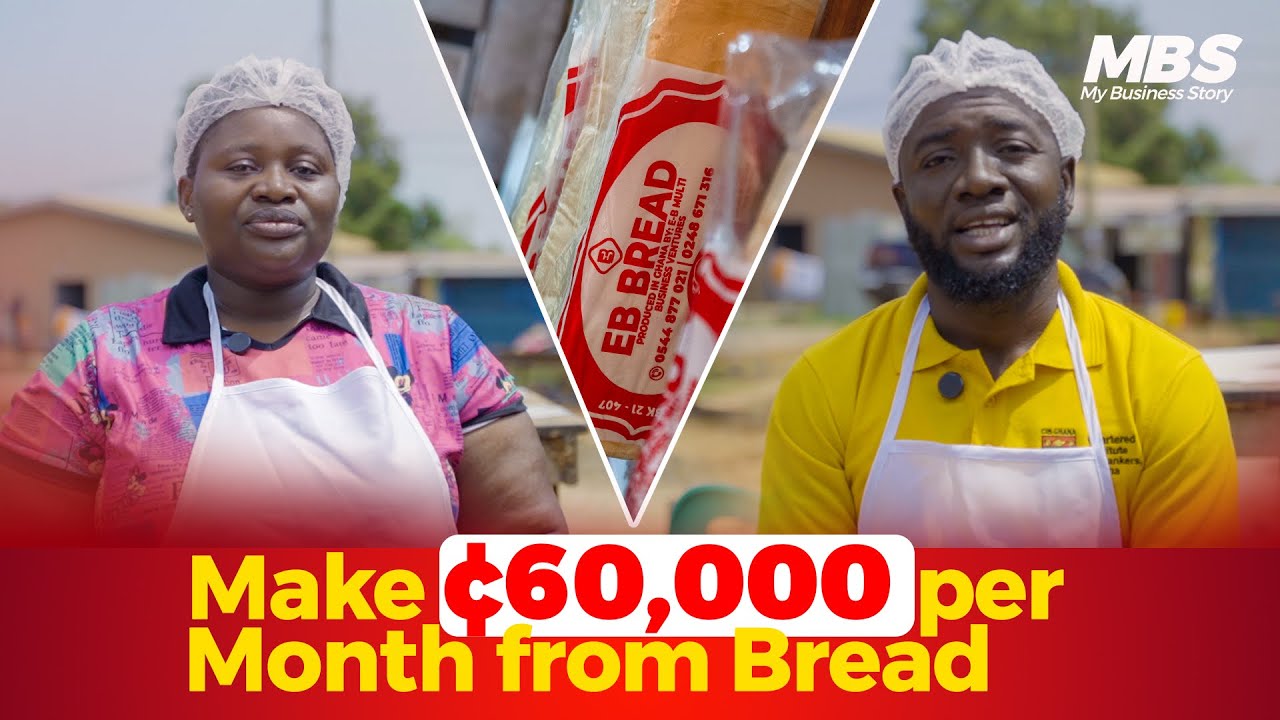
Ghana is, by all practical accounts, a bread nation. From the large commercial bakeries whose delivery trucks fan out across Greater Accra at dawn to the small family-run kitchens that bake four bags of tea bread every morning before 7 am and sell out before breakfast is over — the appetite for bread is real, consistent and growing.
Market data backs this up. Ghana’s bread and bakery products sector has shown consistent growth, with volume expected to reach 1,600 million kilograms by 2029.
The market is growing from two angles: the sheer volume of everyday bread consumed as a breakfast staple, and the rising demand for premium and specialty baked goods driven by an expanding middle class in urban centres.
What makes bread particularly attractive as a business in Ghana is the speed of the sale. Unlike many other products that sit on shelves for weeks, bread has a daily demand cycle. People buy it every morning.
If your product is good and priced right for your community, your stock moves fast. Known industry experts with decades of experience teaching bakers across Ghana consistently note that bread businesses with solid foundations can see profit margins running between 70% and 100%.
Key Takeaway: The bread market in Ghana is not saturated — it is stratified. There is room at the community level, the neighbourhood level, and the commercial level. Knowing where you fit is your first strategic decision.
That said, profitability is not automatic. Many people go into bread baking thinking the hard part is the baking itself, only to discover that the real challenges lie in understanding their costs, mastering the science of production, and building a reliable customer base. This guide addresses all of those dimensions.
You Don’t Need Big Money to Start a Shop in Ghana: Here’s What You Need
Start a Local Restaurant Business in Ghana: Step-by-Step Guide
Types of Bread That Sell in Ghana
Not every type of bread sells equally well in every part of Ghana. Understanding local preference is fundamental before you bake a single loaf. Here are the main varieties of bread consumed across the country:
Tea Bread
This is the undisputed king of the Ghanaian breakfast table. Tea bread has a slightly crusty exterior, a lighter, less sweet crumb, and is typically eaten with tea, koko (fermented corn porridge), or Milo. It is sold in virtually every town and village.
Bakers who specialise in tea bread can move several bags of flour’s worth of bread in the early morning hours alone.
There are families in cities like Accra who bake four to five bags of tea bread daily from home and sell out before midday — every single day.
Butter Bread (BB Bread)
Popular particularly in the Ashanti Region, butter bread is richer, heavier and more buttery than tea bread. In Kumasi, consumers specifically look for bread with a generous butter content.
If you are baking for a Kumasi market, your bread needs to be well-buttered. This type is sometimes made as a Pullman loaf — baked in a covered pan to produce a perfectly square slice.
Sugar Bread (Sweet Bread)
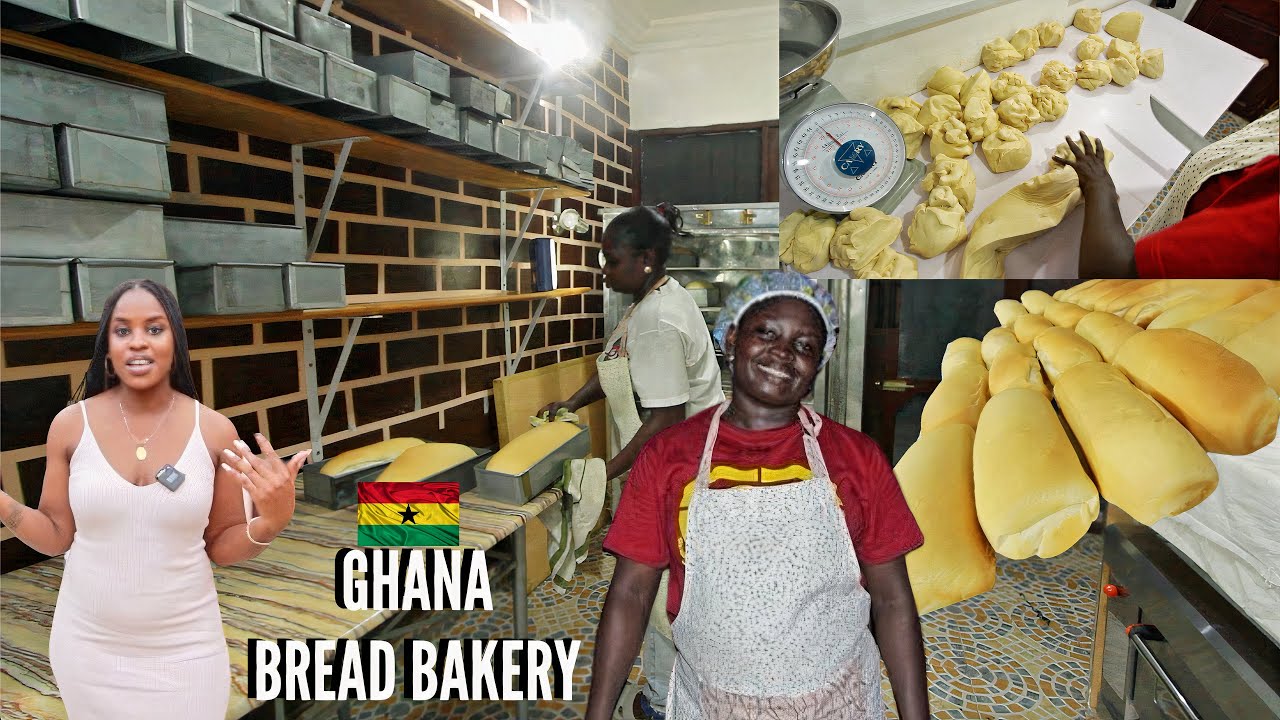
Sugar bread has a softer, sweeter crumb and is popular with children and younger consumers. It uses open-top pans and tends to be more of a treat than a staple. Some bakeries combine sweet bread alongside tea bread to serve different customer segments.
Whole Wheat and Brown Bread
There is a growing demand, particularly in urban areas and among health-conscious consumers in Accra, for whole wheat and brown bread.
This segment is smaller but commands a higher price point. Supermarkets, offices, and wealthier households in upmarket neighbourhoods are the typical customers here.
Rolls and Buns
Bread rolls are popular alongside soups, stews, and as informal snacks. They are baked on trays rather than in loaf pans and can add variety to your product line without requiring significantly different equipment.
Practical Advice: Before you start baking, walk your community. Visit nearby bread sellers. Ask what people are buying and at what price. Do not assume. What sells in Kumasi may not sell in Bolgatanga, and vice versa. Community research is the single most important step before investing in equipment.
How Bread Bakeries Operate in Ghana
Understanding how bread businesses actually function in Ghana helps you plan realistically. Here is how the typical setup works across different scales of operation:
Home Bakeries
Many successful bread businesses in Ghana started — and continue to operate — from home. A home baker typically uses a single fabricated oven, bakes one to two bags of flour per day, and sells directly to neighbours, household customers, and local food vendors.
This is the lowest-cost entry point and entirely viable as a starting point. The key is keeping overheads low while building a loyal customer base in your immediate community.
Hot Bread Kitchens
A step above home baking, a hot bread kitchen is a dedicated baking space — sometimes a container shop or a rented room — where baking happens in larger volumes. These operations typically sell directly from the premises as well as supplying local provisions shops and trotro stations.
Customers are drawn by the warmth and freshness of bread straight from the oven.
Small Commercial Bakeries
At this level, a bakery is baking multiple bags of flour per day using one or more larger ovens, employing staff, and distributing through hawkers, retailers, and institutions.
Brands like Hot Oven and A1 Bread built themselves at this level before expanding to industrial scale. Many thriving bakeries across Accra, Kumasi, Takoradi, Techiman, and Tamale operate comfortably at this level.
Industrial Bakeries
At the top of the pyramid are factories with automated lines producing thousands of loaves daily, supplying national retail chains and supermarkets. These are the operations that can concern small local bakers about competition, but they serve different markets.
Their bread typically lacks the freshness and direct community connection that gives smaller local bakeries a natural competitive advantage.

Steps to Start a Bread Bakery Business in Ghana
You now have enough background information about the bread selling business in Ghana. Let’s quickly move to the next stage, where I show you the steps to starting a bakery business in any region.
1. Research Your Community Market
Your bread business starts within your own community. Before spending any money, you need to understand what your specific local market wants.
- What type of bread do people in your area buy?
- At what price point?
- How many bakeries are already operating nearby, and where are the gaps?
For example, in some Kumasi neighbourhoods, there is a strong and loyal preference for heavily buttered bread.
In coastal communities like Takoradi, tea bread tends to dominate breakfast consumption.
Do not go into the market with assumptions — observe and ask questions first.
2. Get Proper Training
This is perhaps the most important step, and it is the one most people try to skip. One of the most common mistakes aspiring bakers in Ghana make is attempting to learn commercial bread baking through YouTube videos or trial and error alone.
YouTube can show you hobbyist recipes and one-cup tutorials, but it will not teach you the commercial formulas, ingredient science, or business operations that successful bakeries actually use.
The difference between bread that sits unsold for two days and bread that commands a loyal repeat clientele is not visible to the untrained eye — it lies in the formula, the ingredients ratio, the dough handling, and the baking process.
This is why it’s best to seek out professional training from experienced commercial bakers. A single meaningful piece of advice from a mentor who has operated a bakery for years can prevent a costly, demoralising mistake down the line.
3. Write a Simple Business Plan
You do not need a long, complicated document. But you do need clarity on a few critical things:
- How much money do you have to start?
- What is your target scale of operation?
- Who are your customers?
- What types of bread will you make?
- How will you distribute your product?
- What are your monthly costs, and
- What do you need to sell to break even and make profit?
Write these down. They will keep you focused when the business gets difficult.
4. Choose Your Bakery Type and Scale
Be honest about what you can currently afford and manage. You can start from home with a single fabricated oven and grow from there.
Trying to start too big before you have mastered the craft, the costs, and the customer base is a common reason bakeries fail.
A well-run home bakery baking one to two bags daily can be more profitable than a poorly managed full commercial operation burning through expensive electricity and wasting ingredients.
5. Buy the Right Equipment
More on bread-making equipment is covered in the section below. The principle is this: do not buy cheap equipment to save money upfront.
The wrong oven, the wrong mixer, or the wrong pans will cost you far more in spoiled batches, poor shelf life, and lost customers than the savings you made on purchase.
Equipment selection is a science, and getting expert guidance before buying is essential.
6. Source Quality Ingredients and Establish Suppliers
Your ingredients are the foundation of your product. Build relationships with reliable flour suppliers, and understand the difference between soft flour (for cakes and pastries) and hard wheat flour (for bread).
Additionally, know your yeast, your fat, your sugar, and what role each plays in your final product. The wrong ingredient, or the right ingredient in the wrong proportion, will ruin your bread — and your reputation.
7. Register Your Business and Obtain Licences
Register your business name with the Registrar General’s Department in Ghana. If you are operating a food business — and a bakery absolutely qualifies — you should also obtain the relevant food safety and hygiene certification from the Ghana Standards Authority (GSA) or your local health authority.
This protects your customers, builds trust, and ensures you are operating within the law.
Your local District Assembly may also have zoning or business permit requirements.
8. Set Up Your Bakery Space
Whether at home or in a dedicated premises, cleanliness and organisation are non-negotiable. Your baking area must be hygienic.
Also, your storage must be cool and dry for your dry ingredients. Good ventilation is important. Customers who visit your premises — or who buy through retailers who visit — will judge your professionalism by what they observe.
Latest Types and Prices of Roofing Sheets in Ghana
9. Develop Your Recipe and Perfect It
Your bread recipe is your business’s most important asset. A great recipe produces bread that is rich, well-structured, soft inside, and has a good shelf life — ideally lasting ten to fifteen days without spoilage.
This shelf life matters enormously for distribution. Work on your recipe until you are consistently proud of what comes out of the oven. Only then should you begin commercial production.
10. Start Selling and Build Your Customer Base
Selling bread in Ghana is a science, not just logistics. A good product alone does not guarantee sales. You need to understand where your customers are, how to reach them regularly, and how to keep them coming back.
More on this is covered in the selling and distribution section below.
Equipment You Need to Start a Bread Bakery in Ghana
One of the single greatest causes of bakery failure in Ghana is buying the wrong equipment. Here is a clear breakdown of what you need and what to watch out for:
Ovens
This is your most important investment. There are several types of ovens used in Ghanaian commercial bread baking:
- Fabricated Convection Ovens: Lower cost, good entry-level option for small-scale baking. These work well for getting started but have limitations at higher volumes.
- Deck Ovens: Industry standard for commercial bread production. They provide even, consistent heat across multiple decks and are the preferred choice for serious bread operations.
- Rotary Ovens: High-volume, high-efficiency ovens that rotate the product during baking. Used in larger commercial bakeries.
Critical Warning: Cake ovens and bread ovens are not interchangeable. Cake is made from soft flour (soft wheat); bread is made from hard flour (hard wheat). The baking environment each product requires is different. A cake oven will not bake commercial bread correctly. Always confirm what your oven is designed for before purchasing. Also, ensure your bread oven is galvanized and padded for proper heat retention and bread quality.
Mixers
Commercial bread dough requires a spiral mixer or a planetary mixer designed for heavy dough. A standard cake mixer is not designed to handle the stiff, elastic dough that bread requires and will break down under commercial volumes.
This is another common and expensive mistake: buying a cake mixer, finding it cannot handle bread dough, and being forced to buy again. Always get expert advice on the right mixer before purchasing.
Bread Pans
Your choice of pan matters more than most beginners realise. Do not use pans made from Aluzinc — they degrade quickly, can give your bread an off-taste, and allow over-fermentation problems that make bread smell of alcohol. Invest in galvanized pans.
Note also that sugar bread is baked in open-top pans, while butter bread (Pullman loaf) is baked in covered pans. Tea bread and rolls are baked on flat trays.
Proofing Area
After mixing, your dough needs to rest and rise in a controlled environment. Ensure you have space that is warm, draft-free, and hygienic for proofing your dough before it goes into the oven.
Bread Sealing Machine
Once you are producing commercial volumes, hand-tying bread bags with ribbons is impractical and slow. A bread sealing machine allows you to package products quickly, professionally, and consistently. This is a smart investment once you move beyond very small home production.
Weighing Scale
A reliable commercial weighing scale is essential for consistent product sizing, accurate ingredient measurement, and fair pricing. Consistent loaf weights build customer trust and protect your profit margins.
Other Essentials
- Dough cutting board or bench
- Dough scraper
- Thermometer (for monitoring oven and dough temperature)
- Ingredient storage containers (airtight, clean, labelled)
- Delivery bags or crates for distribution
Key Ingredients and Sourcing
Commercial bread baking is part art, part science. Using the right ingredients in the right proportions is what separates a great loaf from a mediocre one. Here is what you need to understand:
Bread Flour (Hard Wheat Flour)
Always use flour made from hard wheat for bread. It has a higher protein content, which is essential for gluten development and giving your bread its structure, volume, and chew.
Buying the wrong flour — soft wheat flour, used for cakes and biscuits — is a mistake that produces dense, flat, poor-quality bread.
Yeast
Yeast is the leavening agent that makes your bread rise. Commercial bakers use active dry yeast or instant yeast.
The right quantity of yeast relative to your flour weight is critical. Too little and your bread will not rise properly. Too much and you risk an over-fermented, alcoholic-smelling product.
Master your yeast percentage and keep it consistent.
Fat (Margarine or Shortening)
Fat contributes to flavour, texture, softness, and shelf life. For butter bread and tea bread in Ghana, margarine is the most common choice.
In Kumasi, where consumers prefer a rich, buttery flavour, the fat content of your recipe will determine whether customers are loyal or not. Do not cut corners on fat quality in pursuit of lower ingredient costs.
Sugar and Salt
Sugar feeds the yeast, contributes to browning, adds flavour, and supports shelf life. Salt controls fermentation, strengthens gluten, and enhances taste.
The ratio of these two must be balanced correctly in your formula.
Water
The quality and temperature of your mixing water matter. Commercial bakers do not simply use tap water without thought.
Temperature control during mixing affects how your dough ferments and develops. This is one of the knowledge areas where formal training gives you a significant advantage.
Optional Improvers and Additives
Be cautious here. Some ingredient additives are worth understanding; others are a waste of money. More importantly, substances like saccharine and potassium bromate are banned by food safety agencies worldwide and must never be used in your bread.
Stick to clean, approved, well-understood ingredients. Your customers’ health — and your business’s reputation — depend on it.
Bread Scaling, Costing and Pricing: The Secret to Profit
Here is where many Ghanaian bakers struggle — and where the difference between a profitable bakery and a struggling one is made.
You can bake excellent bread and still make no money if you do not understand your numbers.
What Is Bread Scaling?
Scaling is the process of dividing your dough into precise, consistent portions before placing them in pans. Most bakers do this by feel or by rough guesswork, which leads to inconsistent loaf sizes, wasted dough, and difficulty pricing accurately.
Professional scaling means weighing each dough portion to a set target, ensuring every loaf is the same size, baked correctly, and priced fairly.
Understanding how many loaves you should get from one bag of flour — and what each loaf costs to produce — is the single most important financial skill a bakery owner in Ghana can develop.
Far too many bakers skip this step. They cut, fill pans, bake, and sell without ever knowing their true cost per loaf. This is why bakeries close even when their bread is good.
Surely, you don’t want to suffer this fate with your bread business, do you?
How to Calculate Your Bread Production Cost
To know your true production cost per loaf, you must add up every input cost: flour, yeast, fat, sugar, salt, water, fuel or electricity, packaging, and a proportion of your overhead costs (rent, labour, transport).
Divide the total by the number of loaves produced. That figure is your cost per loaf. Your selling price must always be above this figure — ideally by a margin that generates the profit you need to sustain and grow the business.
Pricing Your Bread for the Ghanaian Market
Pricing in Ghana is a real tension. Consumers are price-sensitive, especially at the everyday staple bread level. At the same time, the rise in production costs — including flour prices, fuel, and electricity — can compress margins for many bakers.
The answer is not to sell at a loss to compete on price; it is to control your production costs tightly and focus on producing a quality product that justifies your price point.
Understand what your community can and will pay, then design your production model around that reality.
Key Principle: Know exactly how many loaves of bread you get from one bag of flour, what each loaf costs to make, and what profit each loaf generates. These three numbers determine whether your bakery survives or fails.
Branding and Packaging Your Bread
There are talented bakers in Ghana selling excellent bread in plain, unbranded nylon bags while struggling to grow their sales.
On the other side, there are bakeries selling average bread that have built a loyal following simply because of strong, recognisable packaging and branding. Do not underestimate this.
Branded Nylon or Bread Bags
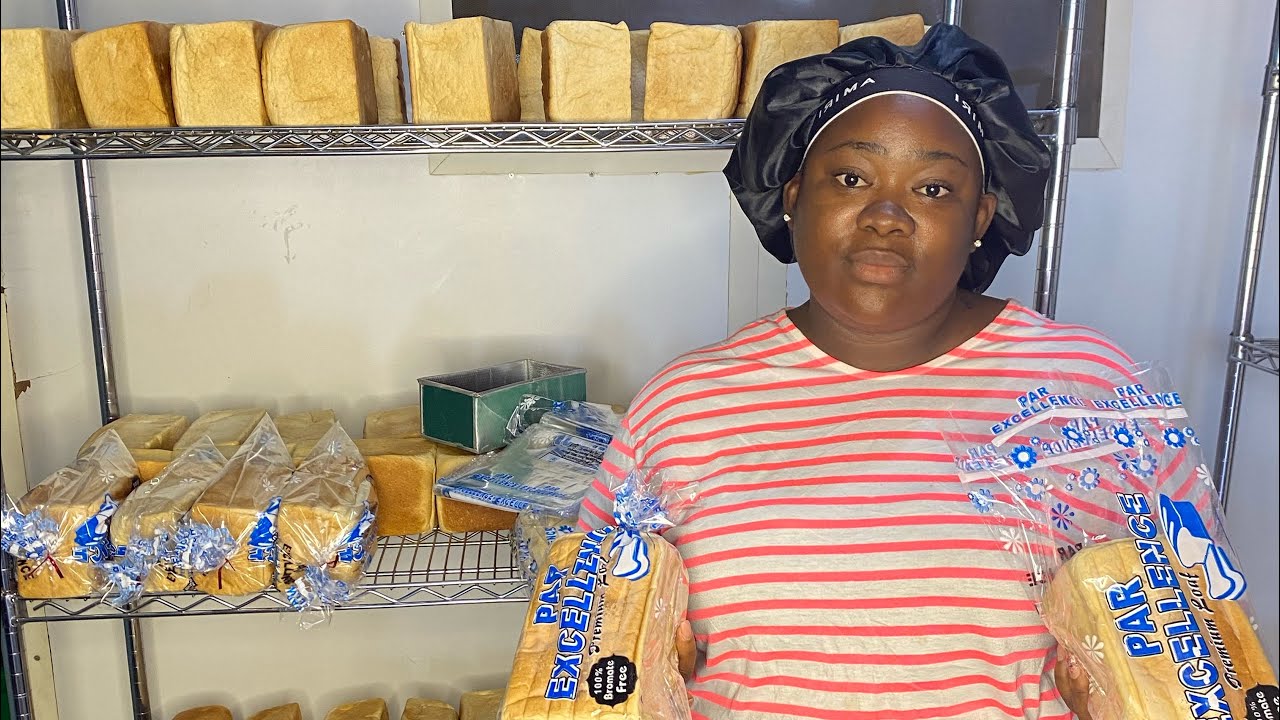
Getting your bread packaged in a branded bag — even a simple “Special Bread” or custom-named bag with your bakery name — transforms how customers perceive your product. It creates an identity. It makes your bread look professional on the shelves of provision stores. And it makes it memorable.
Customers who buy your bread by name are far more likely to ask specifically for it again.
If you are ordering custom-printed nylon bags, be sure to work with reputable printers and understand the process.
Some suppliers hold your printing plates (stereos or blocks) as a form of business leverage. Make sure you own your printing assets or have a clear contractual agreement with your supplier before committing to a custom print run.
Bakery Name and Visual Identity
Choose a name for your bakery that is memorable, easy to say, and means something to your local community. Whether it is tied to your neighbourhood, your family name, or a quality promise (“Golden Bread,” “Fresh Daily Bakery”), your name is the foundation of your brand.
Ensure it is displayed clearly at your premises and on your packaging.
Consistency Is Branding
Ultimately, your most powerful branding tool is product consistency. If a customer buys your tea bread on Monday and it is excellent, and buys it again on Thursday and it is equally excellent, they will become a loyal customer. Inconsistency — even great bread one day and merely adequate bread the next — erodes trust.
Consistent quality is the best marketing you can do in a community market.
How to Sell and Distribute Your Bread in Ghana
Selling bread in Ghana is itself a skill. Many bakers produce great bread and then struggle with moving it. Here are the main distribution channels available to bakery businesses in Ghana:
Direct Sales at Your Bakery Premises
This is the most straightforward channel. Customers come to you. This works well when your bakery is located in a high-traffic area — near a market, a trotro station, a main road, or a densely populated residential area.
Fresh, warm bread draws people in naturally, especially in the early morning hours. Make your space inviting and visible.
Hawkers and Street Vendors
Ghana has a well-established tradition of bread hawking. Hawkers buy from bakeries at a wholesale or slightly reduced price and resell as they move through neighbourhoods, market areas, and transport hubs.
For a bakery, hawkers are a scalable distribution network that requires no additional staff cost. The key is building reliable relationships with hawkers who are consistent and honest.
Provision Shops and Kiosks
Provision shops are the neighbourhood backbone of food retail in Ghana. Supplying your bread to provision shops in your area extends your reach without requiring you to manage the end sales yourself. Negotiate clearly on price, delivery frequency, and return policy for unsold loaves.
Restaurants, Chop Bars, and Canteens
Food businesses — particularly chop bars, school canteens, and office cafeterias — need bread regularly and in consistent quantities.
These are reliable institutional buyers that can take larger volumes and provide predictable demand. Approach them with samples, a consistent delivery schedule, and competitive pricing.
Schools, Offices, and Institutions
Institutions represent a premium segment. Schools that need breakfast bread, offices that provide catering, hospitals and clinics — all of these are potential regular clients.
Quality, reliability, and timely delivery matter enormously to institutional buyers.
WhatsApp and Social Media Orders
Increasingly, Ghanaian food businesses are taking orders via WhatsApp and Facebook. For a home bakery or small commercial bakery, setting up a WhatsApp Business profile and regularly posting photos of fresh product is a low-cost way to build an order base among your community.
Customer testimonials and word-of-mouth referrals amplified through social media can drive meaningful growth without significant advertising spend.
Sales Tip: Do not just bake and hope people come. Build relationships with your first ten regular customers. These ten loyal buyers will tell others. Repeat customers are the engine of every successful community bakery in Ghana.
Approximate Startup Costs for a Bread Bakery in Ghana
We’ve finally got to the elephant in the room: how much do you need to start a bread business in Ghana? I’ve got a few answers to guide you.
The cost of starting a bread bakery in Ghana varies significantly depending on your chosen scale, location, and equipment choices.
The table below gives a realistic range for different scales of operation. These figures are in Ghana Cedis (GHC) and are approximate guides only. Actual costs will depend on your specific circumstances and current market prices.
| Item | Home/Micro Bakery | Small Commercial Bakery |
|---|---|---|
| Oven (fabricated or deck) | GHC 800 – GHC 2,000 | GHC 3,000 – GHC 8,000+ |
| Mixer | GHC 600 – GHC 1,500 | GHC 2,500 – GHC 6,000 |
| Bread Pans & Trays | GHC 200 – GHC 500 | GHC 500 – GHC 2,000 |
| Initial Ingredients (1 month) | GHC 500 – GHC 1,200 | GHC 2,000 – GHC 5,000 |
| Packaging (nylon bags) | GHC 100 – GHC 300 | GHC 400 – GHC 1,500 |
| Bakery Space / Rent (monthly) | GHC 0 (home) – GHC 500 | GHC 500 – GHC 2,000 |
| Utilities & Gas / Electricity | GHC 150 – GHC 400/month | GHC 500 – GHC 2,000/month |
| Registration & Licences | GHC 200 – GHC 500 | GHC 300 – GHC 800 |
| Training / Mentorship | GHC 200 – GHC 900 | GHC 500 – GHC 3,500 |
It is possible to begin a micro home bakery in Ghana with as little as GHC 1,500 to GHC 2,500 if you are disciplined about your spending and are baking at a small scale while you develop your skills and customer base.
Do not let the larger figures above put you off. Many of the most successful bakery businesses in Ghana started small and reinvested their profits to grow.
Applied knowledge, applied consistently, is more valuable than a large upfront investment.
Challenges to Expect in the Ghana Bread Business
It would be dishonest, on my part, to paint the bread business as a guaranteed easy path. Here are the real challenges you will face and how to approach them.
Rising Input Costs
Flour, fuel, and electricity prices in Ghana have risen significantly in recent years, driven by exchange rate fluctuations and global market dynamics. This squeezes production margins.
The solution is rigorous cost management. Know your exact cost per loaf, adjust your recipe to maintain quality at the best possible cost. Beyond these, build supplier relationships that give you some price stability.
Competition
The bread market in Ghana ranges from large established brands to the neighbourhood baker down the road. Competing on price alone is not a sustainable strategy. Competing on quality, consistency, freshness, community trust, and service is where small and medium bakeries win.
Your competitive advantage as a local baker is nearness and personal relationship with your customers — something no large factory can replicate.
Power Supply Unreliability
Electricity supply remains unpredictable in parts of Ghana, which creates challenges for any business that depends on electric ovens and mixers.
Many bakers use gas-powered ovens precisely to reduce dependence on the national grid.
If you rely on electricity, invest in at least a partial backup solution and factor power costs into your pricing carefully.
Shelf Life Management
If your bread spoils quickly — within two to three days — you will face returns from retailers and lost sales. Bread that lasts ten to fifteen days without spoilage is the commercial benchmark.
To achieve this, you need the right formula, the right ingredients, the right baking conditions, and clean, proper packaging. This is one of the most important reasons to invest in proper training before you begin commercial production.
Wrong Equipment Purchases
As discussed extensively above, buying the wrong oven, mixer, or pans is a costly and demoralising mistake that many new bakers make. Get guidance before spending money on equipment.
Poor Costing and Pricing
Many bakeries in Ghana are unprofitable, not because they fail to sell bread, but because they have never actually calculated their true production cost per loaf.
They price based on what the competition charges or what “feels right” — and slowly bleed money without knowing why.
Always remember: mastering your numbers is non-negotiable.
How to Grow Your Bread Bakery Business in Ghana
Once your bakery is operating consistently and profitably, growth becomes the next focus. Here are the key levers for expanding a bread business in Ghana:
Want More Customers for Your Business?
PTG Marketing provides turnkey content marketing services designed specifically for small businesses in Ghana. We create strategic content that builds trust, drives traffic, and converts readers into paying customers. 👉 Start attracting consistent customers today. Talk to PTG Marketing.
Increase Production Volume Gradually
Expand your output as your market grows. Moving from one bag to two bags per day, and then to four, should be driven by demonstrated demand — not by ambition alone. Manage your cash flow carefully during growth phases.
Diversify Your Product Range
Tea bread alone can be a viable business, but adding butter bread, rolls, or specialty items expands your customer base and your revenue per customer.
Introduce new products only when you have mastered the quality of your existing line.
Build Your Distribution Network
The more hawkers, provision shops, and institutional clients you supply, the more insulated your business is from any single point of failure.
Grow your distribution systematically and maintain quality and reliability as you do so.
Invest in Better Equipment Over Time
Reinvest profits into better equipment as you grow. Upgrading from a fabricated oven to a deck oven, or from manual dough cutting to a dough divider, improves quality, consistency, and output capacity. Each investment should be justified by actual sales demand.
Build an Online Presence
Even a simple Facebook page or WhatsApp Business account for your bakery allows customers to find you, place orders, and share your bread with others. Post photos of fresh product regularly. Share your story. Build a community around your brand. In Ghana’s mobile-first internet culture, your online presence is increasingly as important as your physical one.
Consider building a dedicated business website over time — it creates a permanent, searchable online home for your brand that no social media platform can take away.
🚀Ready to Grow Your Small Business in Ghana?
Starting your shop is one thing. Getting customers consistently is another. At PTG Marketing, we provide turnkey content marketing services for small local businesses in Ghana. From SEO blog posts and social media content to lead-generating strategies, we handle everything — so you can focus on running your business. Don’t just open your shop. Make sure people find it. 👉 Let’s grow your business the smart way. Contact PTG Marketing today.
Attend Continuous Training
The bread industry is not static. New ingredients, new techniques, and new market trends emerge regularly.
Bakers who commit to ongoing learning — attending workshops, reading, and connecting with mentors — consistently outperform those who stop learning after they begin producing. Treat your education as a business investment, not an expense.
Track Your Numbers Every Month
Review your production costs, sales volumes, and profits monthly. Identify what is working and what is not.
Adjust your recipe, your pricing, or your distribution based on real data. A business that does not measure cannot improve.
Related Posts
Final Thoughts
The bread business in Ghana is genuinely one of the most sustainable small business opportunities available to anyone willing to invest in the right knowledge and approach it seriously. The demand is daily. The market is everywhere. The entry cost is accessible. And the profit potential — with the right foundation — is real.
But it is not a shortcut. The bakers who succeed in Ghana are the ones who took the time to understand their community’s tastes before investing, who got proper training before they started commercial production, who calculated their costs before setting their prices, and who built their businesses one consistent, quality loaf at a time.
Start with what you have. Learn before you leap. Master your product before you scale. Take your numbers seriously from day one. And build relationships with your customers, your suppliers, and your community — because in the bread business, as in all business, people buy from people they trust.
If you found this guide useful, share it with someone who is thinking about starting a bread business in Ghana. And if you have questions, drop them in the comments below — we are happy to help.
Your Shop Deserves to Be Seen
You’ve taken the bold step to start. Now it’s time to attract customers consistently. PTG Marketing helps small businesses in Ghana turn visibility into sales through done-for-you content marketing — blog writing, social media content, brand messaging, and digital growth strategies tailored for local markets. No stress. No confusion. Just results. 👉 Partner with PTG Marketing and let’s grow your brand together.
Last Updated on March 12, 2026 by PTG Market
Author


Discover more from PTG Marketing
Subscribe to get the latest posts sent to your email.


